Flipkart Minutes Has 1,000 Dark Stores Now. Here's What It Means for Brands Already on Blinkit, Instamart and Zepto.
- Jul 17
- 4 min read
For most of 2024, Flipkart Minutes felt like a side project. A pilot running in a handful of cities, mostly under the radar while Blinkit and Zepto were fighting for metro dominance. That changed considerably in 2025, and by mid-2026 it is a different story altogether.
Flipkart Minutes crossed 1,000 dark stores in June 2026, is adding more than 100 new stores every month, and has announced a target of 1,500 dark stores by end of year. The company saw 16 times order growth in the second half of 2025 compared to the first half. Order volumes are growing 40 to 50 percent in every 30 to 45 day window. And unlike Blinkit and Zepto, which are densifying their existing metro footprints, Flipkart Minutes is expanding into 130 plus cities, with a deliberate focus on Tier 2 and Tier 3 markets like Rohtak, Muzaffarpur, and Asansol.
This is not a side project anymore. So what does it actually mean for brands?

The category play is different from Blinkit and Zepto
The most important thing to understand about Flipkart Minutes is that it is not trying to out-Blinkit Blinkit. The platform is leaning into its existing strength, which is electronics, phones, accessories, and higher-value categories that the other platforms have only recently started taking seriously. According to Flipkart's own data, non-grocery items already account for nearly 20 percent of Minutes' revenue, which is significantly higher than what Blinkit and Zepto see from similar categories.
This matters for brands in personal care, home essentials, electronics accessories, and other non-FMCG categories that have historically struggled to find meaningful placement on quick commerce. The grocery-first assortment model of Blinkit and Zepto means there is limited shelf space and limited category manager attention for products that do not move like packaged foods. Flipkart Minutes is structurally more receptive to these categories, partly because it is built on top of Flipkart's existing seller ecosystem and partly because the category mix is where it is trying to differentiate.
For brands in these spaces, the window to get in early on Flipkart Minutes is arguably more valuable now than it was six months ago. Platforms reward early movers with better placement and lower listing friction before category competition intensifies.
The Tier 2 expansion creates a new distribution question for brands
Blinkit and Zepto are still largely concentrated in metro and Tier 1 cities. Flipkart Minutes expanding into 130 plus cities, many of them in Tier 2 and Tier 3 markets, is opening a distribution channel that did not exist in quick commerce a year ago. For brands that have national distribution ambitions but have been limited to metro pincodes on existing platforms, Flipkart Minutes is worth paying attention to.
The unit economics in Tier 2 cities actually work differently. A dark store in a Tier 2 city needs around 800 orders per day to break even, compared to 1,300 in a Tier 1 city, according to Emkay Global. Lower real estate costs and lower competition among sellers make these markets attractive for platform expansion. Flipkart is using a hybrid operational model, partnering with third-party operators to manage dark store setup in many of these locations, which is how it is adding stores at this pace without the full capital burden falling on its balance sheet.
Whether consumer demand in these markets actually matches the platform expansion is a real question, and the Bernstein research note from May 2026 is honest about it, calling Tier 1 to Tier 3 potential "still unproven." But for brands, the practical implication is that Flipkart Minutes is creating new pincodes where quick commerce visibility is now possible, where it simply was not before.
Amazon Now is doing the same thing simultaneously
It is worth noting that Flipkart Minutes is not alone in this expansion. Amazon Now, Amazon's direct quick commerce play launched in 2025, is also targeting 1,000 plus dark stores by end of 2026 and is expanding beyond its initial metro coverage in Delhi and Mumbai. Amazon committed approximately Rs 2,800 crore to this expansion in 2026.
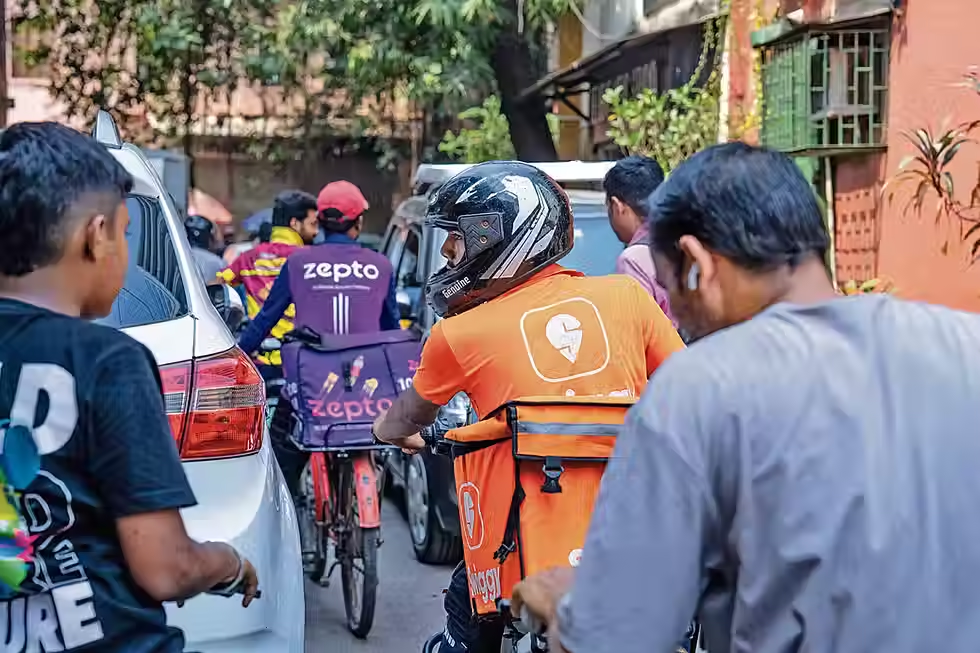
For brands, the emergence of Flipkart Minutes and Amazon Now as serious platforms means the quick commerce landscape is no longer a three-player game. It is expanding into a five or six platform ecosystem, and the operational and budgetary implications of that are worth thinking through now rather than later. Being on Blinkit, Zepto, and Instamart already requires meaningful supply chain investment. Adding Flipkart Minutes and Amazon Now multiplies the PO frequency, the dark store coverage requirements, and the ad spend decisions.
The brands that will manage this expansion well are those that have visibility into where their stock is, which platforms are performing in which cities, and where their ad spend is actually returning results. The ones that will struggle are those managing all of this on spreadsheets and monthly reports.
What to do with this right now
If your brand is in FMCG, personal care, or fast-moving daily essentials, Blinkit and Zepto remain where the volume lives and the priority should stay there. But if your category leans toward electronics accessories, home essentials, or higher-consideration purchases, Flipkart Minutes deserves a serious look in the second half of 2026, before the platform's ad rates and listing fees catch up to where Blinkit is today.
And regardless of category, the Tier 2 expansion across both Flipkart Minutes and Amazon Now is worth watching. The brands that establish distribution in these markets now, while competition among sellers is still relatively low, will have a meaningful head start when consumer demand in these geographies catches up.
RevQ tracks brand performance across Blinkit, Zepto, Swiggy Instamart, and Flipkart Minutes at the pincode level, helping D2C brands see exactly where their distribution is strong and where the gaps are as the platform landscape expands.